

How Your Car’s Heater System Works (And Why It Needs Annual Inspection)
January 17, 2026
The BG Radiator Flush: Protection Against Albuquerque’s Extreme Temperature Swings
February 13, 2026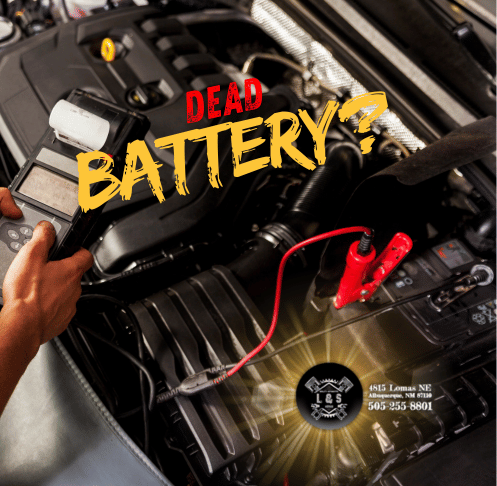
Most Albuquerque drivers believe winter’s cold kills car batteries. They brace themselves for dead batteries on frosty January mornings, assuming freezing temperatures are the culprit. The truth is more surprising: your battery likely died last July, and winter simply exposed the damage that summer’s brutal heat quietly inflicted months ago.
Here’s what you need to know:
- Summer heat accelerates battery degradation far more than winter cold. Research shows batteries in hot climates like Albuquerque last only 30 months on average compared to 50-60 months in cooler regions, making heat the primary enemy of battery longevity.
- Albuquerque’s extreme daily temperature swings of 40°F or more stress battery chemistry worse than steady climates. Combined with our 5,000-foot elevation, weakened batteries struggle during cold morning starts even though the cold didn’t cause the failure.
- Now through February 28th, NAPA offers up to $25 in rebates on qualifying batteries at L&S Quality Auto Repair. This timing lets you replace a heat-damaged battery before it fails completely, backed by NAPA’s 24-month/24,000-mile nationwide warranty.
The Science Behind Heat Damage
When most people picture a dead battery on a cold winter morning, they assume the cold killed it. Battery manufacturers and automotive researchers have proven otherwise. Heat degrades battery chemistry through accelerated chemical reactions, while cold merely slows those reactions temporarily.
The chemical processes inside lead-acid batteries follow the Arrhenius equation, which demonstrates that reaction speed doubles with every 8-15°F temperature increase. In practical terms, a sealed lead-acid battery rated for 10 years at 77°F will only survive 5 years at 92°F, and just 30 months at 106°F. Albuquerque regularly exceeds all these temperatures during summer months.
What actually happens inside an overheated battery? The electrolyte liquid that enables current flow between battery plates begins evaporating. The protective grid that conducts electricity starts corroding, similar to rust forming on metal. Active material on the battery plates sheds and falls away, reducing the battery’s capacity to hold a charge. These processes occur silently throughout summer and fall.
When temperatures drop, chemical reactions slow down, which can actually prolong battery life by reducing degradation. However, slower reactions also mean reduced power output. A battery that lost 40% of its capacity during summer heat may still start your engine on mild fall days, but when January arrives and that same battery needs to deliver maximum cranking power in cold conditions, it finally fails. The cold didn’t kill the battery; it exposed the damage that heat caused months earlier.
Albuquerque’s Unique Battery Challenges
Living at 5,000 feet elevation in a high desert climate creates a perfect storm for battery stress. Our summers routinely hit 95-100°F, with engine compartments reaching 140-160°F when parked in the sun. Then overnight temperatures can drop to the 50s or 60s, creating daily temperature swings of 40°F or more.
These dramatic temperature cycles force battery materials to expand and contract repeatedly, accelerating physical degradation. The dry desert air increases evaporation rates, worsening electrolyte loss. Meanwhile, our elevation means engines need more cranking power to start, as thinner air provides less oxygen for combustion. A battery weakened by summer heat struggles even more at altitude.
Winter presents additional challenges unique to Albuquerque. While we rarely experience the extended sub-zero temperatures of northern climates, our cold snaps combined with altitude create demanding conditions. When morning temperatures drop to 20-30°F, engine oil thickens, making the engine harder to turn over. The battery must deliver significantly more power to overcome this resistance, all while the cold temperatures reduce the battery’s available capacity by 30-40%.
The result is predictable. Automotive surveys reveal batteries in hotter regions like the southern United States have average lifespans of 30 months, compared to 50-60 months in cooler climates. Albuquerque falls squarely in this high-heat category despite our cold winters.
Why Batteries Fail in Winter After Summer Damage
Understanding the timeline of battery failure helps explain why so many batteries die on the first cold morning. Throughout summer, heat silently degrades battery components. Grid corrosion increases, active material deteriorates, and electrolyte levels drop. The battery’s capacity to store and deliver energy gradually diminishes, but drivers notice nothing wrong because the engine starts fine on warm days.
Fall brings cooler temperatures that are actually easier on batteries, but the damage is done. The battery continues functioning adequately because moderate temperatures don’t demand maximum performance. Drivers remain unaware their battery has lost significant capacity.
Then winter arrives with its first hard freeze. The engine oil becomes viscous, requiring substantially more cranking power. Simultaneously, the cold battery can only deliver 60-70% of its rated capacity. A healthy battery handles this scenario easily, but a battery degraded by summer heat cannot. The engine cranks slowly or not at all, and the driver blames winter when heat was the real culprit.
This pattern repeats across Albuquerque every winter. Tow trucks stay busy on cold January mornings, rescuing drivers who thought their battery was fine just yesterday. The cold weather gets blamed, but summer temperatures six months earlier actually sealed the battery’s fate.
Smart Battery Maintenance for Albuquerque Drivers
Proactive battery testing is the most effective defense against unexpected failure. At L&S Quality Auto Repair, we recommend having your battery tested at least twice yearly: once before summer’s extreme heat and again before winter’s cold. Modern battery testing equipment can detect capacity loss and predict failure weeks or months before you get stranded.
Testing takes just minutes and provides valuable information about your battery’s actual condition versus its rated capacity. A battery showing 60-70% capacity should be replaced soon, even if it still starts the engine reliably. Waiting invites failure at the worst possible moment, like when you’re leaving for work on a freezing morning or returning to your car after a long day.
Right now through February 28th, NAPA offers rebates that make battery replacement more affordable. You can receive $20 back on NAPA Legend and Legend Premium AGM batteries, or $25 back on AAA and AAA AGM batteries. These aren’t budget batteries, either. NAPA batteries come with a 24-month/24,000-mile warranty that’s honored nationwide at any NAPA AutoCare Center, providing protection whether you’re in Albuquerque or on a road trip.
The timing of this promotion is ideal. Replacing a heat-damaged battery in February means you’ll have a fresh battery heading into next summer’s heat. Modern AGM batteries handle temperature extremes better than conventional batteries, making them particularly well-suited for Albuquerque’s climate. AGM technology offers higher power reserves and superior resistance to both heat and cold.
Taking Action Now
Don’t wait for the telltale click of a dead battery on a cold morning. Schedule a battery test at L&S Quality Auto Repair before February 28th to take advantage of current rebates. Our technicians use professional-grade testing equipment to assess your battery’s true condition, not just whether it starts the engine today.
If testing reveals your battery has been compromised by heat damage, replacement now prevents inconvenient failure later. You’ll drive with confidence knowing your battery can handle both Albuquerque’s remaining winter cold and the brutal summer heat ahead. The NAPA warranty provides additional peace of mind, covering your investment for two years or 24,000 miles, whichever comes first.
Located at 4815 Lomas Boulevard NE, L&S Quality Auto Repair serves the UNM, Nob Hill, and greater Albuquerque area with honest, expert automotive service. We understand how New Mexico’s unique climate affects vehicles, and we stock NAPA batteries specifically chosen for high desert conditions. Call us at 505-255-8801 to schedule your battery test, or stop by Monday through Friday between 8 AM and 5:30 PM. Take advantage of the NAPA rebate before it expires on February 28th, and protect yourself from the battery failure that summer’s heat is planning for you.