


Winter Battery Myths: Why Albuquerque’s Summer Heat Actually Kills Your Battery
February 1, 2026
Your A/C Already Faced Its First Test: What That Early 90-Degree Day Revealed
March 20, 2026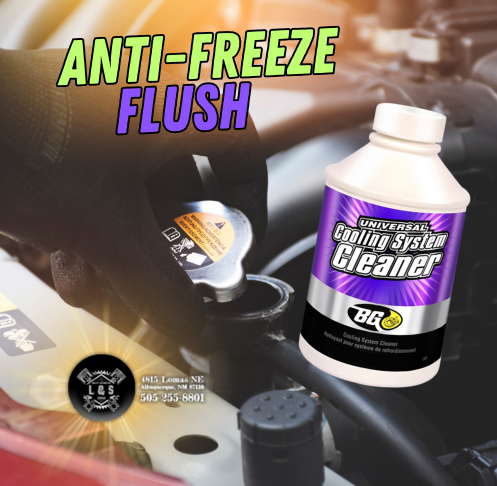
Your vehicle’s cooling system faces challenges in Albuquerque that drivers in moderate climates never experience. Our high desert environment creates daily temperature swings of 40-70°F, forcing cooling systems to work harder than in regions with stable temperatures. Add our 5,000-foot elevation and intense UV exposure, and it becomes clear why standard radiator maintenance isn’t enough. A professional BG radiator flush provides the deep cleaning and protection your cooling system needs to survive New Mexico’s demanding conditions.
What makes the BG flush essential for Albuquerque vehicles:
- Albuquerque’s extreme daily temperature variations stress cooling systems more than steady climates. When ambient temperatures swing from 35°F at dawn to 95°F by afternoon, coolant must regulate engine temperature across a massive range while maintaining its protective properties.
- Old coolant loses effectiveness at altitude and under temperature stress. Degraded coolant becomes acidic, corroding radiators, water pumps, and thermostats from the inside while failing to prevent overheating during summer heat or freezing during winter cold snaps.
- BG’s professional flush removes scale, rust, and mineral deposits that simple drain-and-fill services leave behind. Combined with BG Universal Super Cool additive, this service restores proper heat transfer and corrosion protection, backed by L&S’s 24-month/24,000-mile NAPA warranty.
How Temperature Swings Damage Cooling Systems
Most drivers understand that cooling systems prevent overheating, but fewer realize how temperature variations accelerate system degradation. When coolant heats and cools repeatedly, it expands and contracts. This constant cycling stresses hoses, gaskets, and seals. In climates with stable temperatures, this expansion-contraction cycle is gradual and manageable. In Albuquerque, where your car might sit at 35°F overnight and then operate at 200°F engine temperature by afternoon, the stress is severe.
The coolant itself suffers from these temperature extremes. Modern coolant contains a carefully balanced mixture of antifreeze, water, and corrosion inhibitors. These corrosion inhibitors are chemical additives that protect aluminum, steel, and copper components from oxidation and degradation. Over time and through repeated heating and cooling cycles, these inhibitors break down and become depleted.
When corrosion inhibitors fail, the coolant’s pH changes from neutral to acidic. Acidic coolant actively attacks metal components, causing internal corrosion that creates rust and scale. This contamination circulates through the system, settling in narrow passages and reducing coolant flow. Reduced flow means less efficient heat transfer, forcing the engine to run hotter even when the cooling system appears to be working.
Meanwhile, mineral deposits from hard water in the coolant mixture accumulate on heat transfer surfaces inside the radiator and engine passages. Albuquerque’s water contains dissolved minerals that contribute to this buildup. Even small amounts of scale on heat transfer surfaces dramatically reduce the cooling system’s efficiency, similar to how mineral deposits inside a water heater reduce its heating capacity.
Why Altitude and Sun Exposure Matter
Operating at 5,000 feet elevation creates unique challenges for cooling systems. Thinner air at altitude means less atmospheric pressure, which lowers water’s boiling point. Water that boils at 212°F at sea level boils at approximately 202°F in Albuquerque. While coolant mixtures raise the boiling point significantly, the principle remains: your cooling system operates closer to its limits at altitude than it would at sea level.
This reduced margin of safety means any degradation in cooling system performance has greater consequences. A cooling system that might handle 10% efficiency loss at sea level could overheat at altitude with the same degree of contamination. Regular maintenance becomes more critical, not less.
New Mexico’s intense sun exposure accelerates the aging of external cooling system components. UV radiation degrades rubber hoses, causing them to become brittle and crack. The extreme temperature variations compound this effect, as hoses repeatedly flex and contract. Older vehicles in Albuquerque often develop cooling system leaks from hose failure, especially original hoses that have endured years of sun exposure and temperature cycling.
The cooling system must also contend with dust and particulates common in our high desert environment. While cabin air filters protect the interior, radiators face direct exposure to road dust and debris. External contamination blocks airflow through radiator fins, reducing cooling efficiency. Internal contamination from degraded coolant reduces heat transfer. Together, these factors can overwhelm a cooling system during summer’s peak temperatures or when towing and climbing grades.
What Makes BG Flush Superior to Standard Service
Many quick-lube facilities offer coolant service, but most provide only a simple drain-and-fill. This basic service removes some old coolant but leaves substantial contamination behind. Coolant passages in engines contain numerous pockets and passages where old fluid remains. The heater core, a small radiator-like component that provides cabin heat, retains old coolant. A drain-and-fill might replace 60-70% of the coolant, leaving 30-40% of degraded fluid mixed with the new coolant.
More problematically, drain-and-fill service does nothing to remove accumulated scale, rust, and mineral deposits clinging to internal surfaces. These contaminants continue blocking heat transfer and restricting flow even after fresh coolant is added. It’s similar to draining dirty engine oil without changing the filter; you’ve removed some contamination but left plenty behind.
The BG Cooling System Service uses a multi-step professional process designed to actually clean the system, not just exchange fluid. First, technicians add BG Universal Cooling System Cleaner to the existing coolant. The engine runs at operating temperature for 10-30 minutes while this cleaner circulates through every passage, breaking down scale, dissolving mineral deposits, and lifting rust and corrosion products from metal surfaces.
This cleaner works chemically rather than through harsh acids or abrasive compounds. It safely removes contamination without damaging aluminum, steel, or rubber components. Unlike some aggressive flush chemicals that can harm gaskets and seals, BG’s formulation is specifically designed to be safe for all cooling system materials.
After the cleaning cycle, technicians use professional exchange equipment to thoroughly remove the old coolant along with all the loosened contamination. This equipment connects to the cooling system and exchanges old fluid for new while the engine runs, ensuring complete circulation through every passage including the heater core and engine block. The result is near-complete removal of old coolant and contaminants, typically achieving 95-98% replacement rather than the 60-70% of a drain-and-fill.
Fresh coolant is then added at the proper concentration for Albuquerque’s climate. Finally, technicians add BG Universal Super Cool, a conditioner that enhances the new coolant’s protective capabilities. This additive boosts corrosion inhibitors, improves heat transfer efficiency, and helps prevent future scale formation. The system is then deaerated to remove air pockets that could cause hot spots or circulation problems.
Preventing Expensive Failures
Cooling system failures cascade into major engine damage faster than most drivers realize. When a thermostat fails due to corrosion, the engine may overheat before warning systems alert you. Overheating can warp cylinder heads and blow head gaskets, repairs costing thousands of dollars. A corroded water pump may fail suddenly, leaving you stranded and potentially causing severe overheating if you attempt to drive.
Radiator replacement runs $400-$800 for most vehicles, but this cost pales compared to engine damage from overheating. A warped cylinder head can require engine removal and machine work costing $2,000-$4,000. A blown head gasket often involves similar labor costs. These failures typically result from years of deferred cooling system maintenance, not sudden catastrophic events.
Consider the math. A professional BG Cooling System Service costs a fraction of replacing a single major component like a radiator or water pump. Performing this service every 30,000 miles prevents the corrosion and contamination that causes these components to fail prematurely. For vehicles driven 12,000-15,000 miles annually in Albuquerque, this means service every 2-3 years, a small investment to protect an engine worth thousands.
The BG service also extends the life of expensive components. Modern radiators contain aluminum cores and plastic tanks, materials vulnerable to corrosion from acidic coolant. Water pumps use sealed bearings and impellers that corrode when protective inhibitors deplete. Heater cores, difficult and expensive to replace, develop leaks from internal corrosion. Clean, properly conditioned coolant with fresh inhibitors protects all these components.
Timing Your BG Flush for Maximum Protection
The ideal time for BG Cooling System Service is before summer heat arrives or before a long road trip. Spring provides perfect timing in Albuquerque, giving your cooling system fresh protection before temperatures climb into the 90s and 100s. Fall service works well too, ensuring your system can handle winter cold without freezing concerns while preparing for the next summer.
For vehicles approaching or exceeding 30,000 miles since the last coolant service, don’t delay. Coolant degrades continuously, and inhibitor depletion accelerates as contamination increases. Waiting for visible problems like leaks or overheating means damage has already occurred. Preventive service when the system is still functioning properly costs less than reactive repairs after failure begins.
Vehicles with no service history or unknown maintenance deserve immediate attention. Used cars purchased from private sellers may have years-old coolant still circulating. Even if the coolant looks acceptable, its protective inhibitors may be completely exhausted. Testing coolant pH with professional test strips, available at L&S Quality Auto Repair, reveals the coolant’s actual condition in seconds.
Signs that coolant service is overdue include visible rust or discoloration in the coolant overflow reservoir, a sweet smell from the vents indicating heater core leakage, engine temperature running hotter than normal, or poor cabin heating performance in winter. Any of these symptoms indicates the cooling system needs immediate professional attention. However, waiting for symptoms means you’ve already entered the failure zone. Regular preventive service avoids symptoms entirely.
The L&S Advantage for Cooling System Service
L&S Quality Auto Repair has served the Albuquerque community for years, building a reputation on honest service and expert technical knowledge. As a NAPA AutoCare Center, we maintain professional standards and offer the industry’s best warranty: 24 months or 24,000 miles, honored at thousands of locations nationwide. This warranty means your investment is protected whether you’re driving to Santa Fe or taking a cross-country road trip.
Our technicians understand how New Mexico’s climate affects vehicles differently than moderate climates. We’ve seen countless cooling system failures that wouldn’t occur in Seattle or Michigan, failures directly attributable to our temperature extremes and elevation. This experience informs our maintenance recommendations. When we suggest BG Cooling System Service, it’s because we’ve seen what happens when it’s neglected in Albuquerque’s conditions.
We use genuine BG products and professional BG exchange equipment, not generic substitutes. This matters because BG’s formulations are specifically engineered to clean effectively while remaining safe for modern cooling system materials. The BG Universal Cooling System Cleaner and BG Universal Super Cool work together as a system, providing cleaning and protection that inferior products cannot match.
Located at 4815 Lomas Boulevard NE, we serve UNM students, Nob Hill residents, and the greater Albuquerque area. Our convenient location and Monday-Friday hours from 8 AM to 5:30 PM make scheduling service around your work and school schedule straightforward. Call 505-255-8801 to discuss your vehicle’s cooling system needs or schedule a BG Cooling System Service. Protect your engine from Albuquerque’s temperature extremes with the professional service it deserves.