


The BG Radiator Flush: Protection Against Albuquerque’s Extreme Temperature Swings
February 13, 2026
What Winter Did to Your Vehicle: A Spring Damage Assessment Guide
March 31, 2026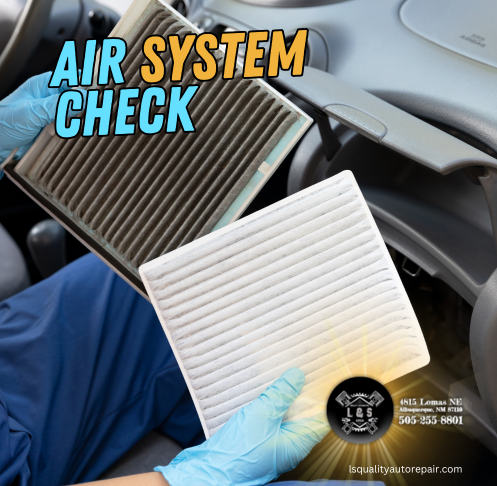
Albuquerque’s first 90-degree day arrived ahead of schedule this year, and your vehicle’s air conditioning system got an unexpected early exam. If the air blowing from your vents felt weak, took forever to cool down, or carried a musty smell, your A/C just told you something important. The system that sat dormant through winter wasn’t ready, and the message is clear: address it now before daily triple-digit temperatures make a struggling A/C unbearable.
- A/C systems lose efficiency during months of inactivity as seals dry and refrigerant slowly escapes
- Cabin air filters in the high desert collect dust far faster than in humid climates
- Early diagnosis prevents the expensive compressor failures that peak summer heat causes
How Winter Dormancy Affects Your A/C
Your vehicle’s air conditioning system isn’t like a light switch that simply works or doesn’t. It’s a complex network of components that depend on regular operation to stay healthy. The compressor, which pressurizes refrigerant and serves as the heart of the system, contains oil that lubricates its internal components. When the system sits unused for months, that oil settles to the bottom. The first time you demand cold air, the compressor runs without proper lubrication until that oil circulates again. This causes accelerated wear that accumulates over multiple seasons of winter dormancy followed by sudden summer demands.
The refrigerant itself presents another issue. While your A/C is technically a sealed system, microscopic gaps exist at every connection point, seal, and fitting. Refrigerant molecules are small enough to migrate through these gaps over time. A system that held a perfect charge last September may have lost enough refrigerant over the winter to compromise cooling performance. The system still runs, still blows air, but that air never reaches the temperature it should. Many drivers assume this gradual decline is normal aging rather than a serviceable condition.
Rubber seals and O-rings throughout the system also suffer from extended inactivity. These components stay pliable through contact with refrigerant oil during normal operation. Months without that contact allows them to dry and harden. When the system finally activates, these compromised seals may leak or fail to maintain proper pressure. The damage from one winter of inactivity may be minimal, but the effects compound over years of the same pattern.
The High Desert Dust Factor
Albuquerque’s air quality presents unique challenges for cabin air filtration. The high desert environment means low humidity, fine particulate matter, and seasonal dust events that coastal or humid climates simply don’t experience. Your cabin air filter, which cleans the air before it enters the passenger compartment, works overtime in this environment. A filter rated for 15,000 miles in Seattle may be compromised at 8,000 miles in Albuquerque.
When that filter clogs, airflow through the evaporator decreases. The evaporator is the component inside your dashboard that actually cools the air, and it requires sufficient airflow to function efficiently. Restricted airflow means the evaporator can’t transfer heat effectively, so the air exiting your vents never gets as cold as it should. The system works harder for less result, stressing the compressor and consuming more fuel in the process.
A severely clogged cabin filter also allows dust to bypass the filtration media entirely, depositing particles directly on the evaporator fins. Over time, this coating insulates the evaporator and further reduces efficiency. Cleaning an evaporator requires significant labor to access the component, making it far more expensive than simply replacing filters at appropriate intervals. The irony is that many drivers ignore the cabin filter because they don’t realize it exists, or they assume it only affects air quality rather than cooling performance.
The musty smell that some drivers notice when first activating their A/C typically originates from biological growth on the evaporator. The evaporator surface stays cold and collects condensation during operation, creating an ideal environment for mold and mildew when the system shuts off and that moisture sits in a dark, enclosed space. High desert conditions reduce but don’t eliminate this problem. An evaporator treatment during regular service eliminates existing growth and helps prevent recurrence.
Warning Signs That Demand Attention
Several symptoms indicate your A/C needs professional diagnosis rather than just time to “warm up” or assumptions that reduced performance is normal. Air that blows but never reaches genuinely cold temperatures suggests low refrigerant, a failing compressor, or restricted airflow. The specific cause requires diagnosis, but the symptom is clear and shouldn’t be ignored.
Unusual noises when the A/C activates, particularly clicking, grinding, or squealing from under the hood, often indicate compressor problems. The compressor clutch engages and disengages to cycle the system, and worn clutch components create distinctive sounds. Internal compressor bearing wear produces grinding that worsens as the component fails. These sounds rarely improve on their own and typically precede complete failure.
Intermittent cooling, where the system works fine sometimes and poorly other times, suggests an electrical issue, a sticking expansion valve, or a compressor clutch problem. The intermittent nature makes diagnosis more challenging because the system may perform normally during a brief test. Accurate diagnosis requires understanding the pattern and conditions under which problems occur.
Water pooling inside the vehicle, typically in the passenger footwell, indicates a clogged condensate drain. The evaporator generates significant condensation during operation, and this water should drain outside the vehicle through a rubber tube. Debris or biological growth can block this drain, causing water to back up and overflow into the cabin. The fix is usually simple, but ignoring it leads to wet carpeting, mold growth, and potential electrical problems from water intrusion.
What Professional A/C Service Actually Includes
A thorough A/C service goes far beyond simply adding refrigerant, though that’s what many quick-service shops offer. Proper diagnosis begins with measuring system pressures at both the high and low sides of the circuit. These readings, interpreted together, reveal whether the system is undercharged, overcharged, restricted, or suffering from component failure. Simply adding refrigerant to a system with a leak or mechanical problem wastes money and refrigerant while leaving the underlying issue unaddressed.
Electronic leak detection identifies refrigerant escaping from seals, connections, or damaged components. Visual inspection supplements this by identifying oil stains that indicate slow leaks the electronic detector might miss. Once leaks are found and repaired, the system can be properly evacuated and recharged to manufacturer specifications. This isn’t guesswork or topping off; it’s measuring the exact amount of refrigerant the system requires for optimal performance.
Compressor oil level and condition matter for long-term reliability. The oil lubricates the compressor and travels throughout the system with the refrigerant. Contaminated oil or incorrect oil levels accelerate wear. During proper service, oil is checked and adjusted as needed.
The drive belt that powers the compressor receives inspection for cracking, glazing, and proper tension. A belt that slips can’t drive the compressor effectively. A belt that breaks leaves you without A/C and potentially without power steering and alternator function, depending on your vehicle’s belt configuration.
Electrical connections, relays, and the compressor clutch receive testing to verify the system can actually activate when demanded. Refrigerant sitting in a properly charged system does nothing if electrical problems prevent the compressor from engaging.
Planning Ahead Before Peak Summer
Albuquerque’s summer heat is relentless from June through August, with daily highs exceeding 100 degrees for extended stretches. An A/C system that struggles in May becomes genuinely unbearable in July. More importantly, the thermal stress of peak summer accelerates the failure of marginal components. A compressor that limps through spring often dies during the hottest week of summer, leaving you without cooling when you need it most and facing emergency repair prices and wait times.
Addressing A/C concerns now means competitive scheduling, planned expenses, and comfortable driving when temperatures peak. Waiting until failure means emergency rates, potential multi-day waits for parts, and suffering through the worst heat while your vehicle sits in a shop.
The early 90-degree day was a preview. Your A/C either passed or it didn’t. If it didn’t, the system told you something worth hearing. The question is whether you address it on your schedule or wait for summer to force the issue on its schedule.