
Your A/C Already Faced Its First Test: What That Early 90-Degree Day Revealed
March 20, 2026
Albuquerque winters deceive drivers with their apparent mildness. No heavy snow accumulation, no road salt corroding everything in sight, no subzero mornings that leave engines struggling to turn over. The season passes without dramatic automotive emergencies, and many drivers assume their vehicles emerged unscathed. They’re usually wrong. The high desert’s winter assault is subtle but real, and by April the cumulative damage shows up in ways that demand attention before summer heat compounds the problems.
- Daily temperature swings of 40 degrees or more stress components through constant thermal cycling
- Year-round UV exposure at 5,000 feet elevation accelerates rubber and plastic degradation
- Cold-morning driving patterns wear brake components faster than many drivers realize
The Thermal Cycling Problem
Understanding Albuquerque’s unique wear pattern requires understanding thermal cycling. When temperatures swing from freezing at dawn to 65 degrees by afternoon, every component in your vehicle expands and contracts. Metal, rubber, plastic, and fluid all respond differently to these changes. Connections that were tight when cold develop slight gaps when warm. Seals that flex with temperature eventually fatigue and crack. This happens invisibly, one cycle at a time, accumulating over months.
Consider what happens to your cooling system hoses over a typical Albuquerque winter. The rubber starts each morning cold and stiff, then warms and becomes pliable as the engine heats up, then cools and stiffens again overnight. This cycle repeats perhaps 150 times between November and March. The rubber’s molecular structure fatigues with each cycle. Externally, the hose may look identical to last year. Internally, the structure has weakened. The hose that looked fine during a visual inspection in March may fail catastrophically in July when summer heat adds additional stress to already-compromised material.
The same principle applies to belts, gaskets, seals, and any other rubber or polymer component under your hood. Thermal cycling doesn’t discriminate. Components rated for a certain lifespan under moderate conditions simply don’t last as long when subjected to Albuquerque’s daily temperature extremes. This isn’t a manufacturing defect or unusual wear; it’s physics applied to materials over time.
Battery terminals and connections suffer their own version of thermal cycling damage. The slight expansion and contraction of connection points allows corrosion to develop at interfaces that would remain clean under stable conditions. This corrosion creates resistance that compromises charging and starting. The battery itself may be healthy, but the connections can’t deliver full power. Many drivers mistake this for a dying battery when the actual problem is serviceable connections.
Elevation and UV Exposure
Albuquerque sits at roughly 5,000 feet elevation, and that altitude affects your vehicle in ways that matter year-round but become particularly relevant after winter. Higher elevation means thinner air and reduced atmospheric filtration of ultraviolet radiation. The same UV exposure that requires Albuquerque residents to think seriously about sunscreen also degrades automotive rubber and plastic continuously.
Windshield wiper blades demonstrate this effect clearly. A quality wiper blade rated for 12 months of service life may streak and chatter after eight months in Albuquerque. The rubber compound hardens and cracks under UV bombardment that’s measurably more intense than at sea level. Drivers notice the streaking during spring rains and assume the blades wore out from use. In reality, they degraded from exposure regardless of how many times they swept the windshield.
Tire sidewalls face the same UV exposure on their outward-facing surfaces. The protective compounds that keep rubber pliable break down over time. Tires stored outdoors, even on a vehicle that’s driven regularly, show sidewall cracking years before the tread wears out. This cracking isn’t cosmetic; it indicates structural degradation that can lead to sudden failure under load. Tires that pass a tread depth inspection may still be unsafe due to age and UV damage invisible to casual observation.
Interior components suffer as well. Dashboard surfaces, door panel plastics, and rubber seals around windows all degrade under Albuquerque’s intense solar load. Cracked dashboards are primarily a cosmetic concern, but deteriorating door and window seals allow dust, noise, and water intrusion that create additional problems. The gradual nature of this deterioration means many drivers don’t notice until the damage becomes severe.
Brake System Wear Patterns
Winter driving in Albuquerque creates specific brake wear patterns that deserve attention each spring. Cold mornings mean cold brake rotors and pads for the first several minutes of driving. Metal and friction materials at low temperatures behave differently than when warm. Stopping power is reduced, requiring more pedal pressure and longer stopping distances. Drivers compensate by braking harder and earlier, which creates its own wear pattern.
More significantly, moisture condenses on cold brake rotors overnight and during cold mornings. This moisture creates a thin layer of surface rust that forms and reforms daily throughout winter. Each time the brakes are first applied, the pads scrub away this rust layer. The process is normal and unavoidable, but it accelerates pad wear and can create uneven rotor surfaces over time. Brake pads that might last 50,000 miles under ideal conditions wear measurably faster when subjected to daily moisture-rust-scrub cycles.
The parking brake mechanism also suffers from infrequent use combined with moisture exposure. Many drivers rarely engage their parking brake on flat ground, allowing the cables and mechanisms to seize from corrosion. A parking brake that worked fine in October may be frozen or only partially functional by April. Testing the parking brake periodically and having it adjusted or serviced as needed prevents the emergency discovery that it doesn’t work when you actually need it.
Brake fluid absorbs moisture from the air over time through microscopic pores in rubber hoses and seals. This moisture lowers the fluid’s boiling point. During heavy braking, fluid that should remain liquid can vaporize, creating air bubbles that compress and produce a soft or spongy pedal feel. Albuquerque’s humidity is low, which slows this moisture absorption compared to humid climates, but it doesn’t prevent it entirely. Brake fluid that tests as heavily contaminated in spring has been compromising your braking performance all winter.
What a Spring Inspection Covers
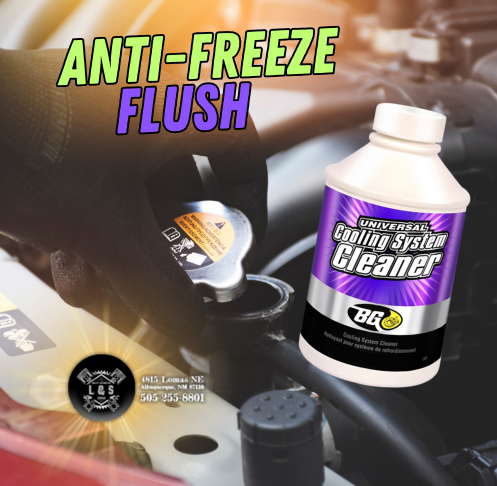
A thorough spring inspection examines every system affected by winter conditions and prepares your vehicle for summer’s different challenges. The cooling system receives particular attention because winter operation rarely stresses it while summer operation depends on it entirely. Coolant level, concentration, and condition are all checked. Hoses and connections are inspected by feel as well as sight, since internal deterioration isn’t visible externally. The radiator is examined for debris, damaged fins, or signs of leakage. The thermostat’s operation is verified, since a sticking thermostat that caused no winter symptoms will cause overheating in summer.
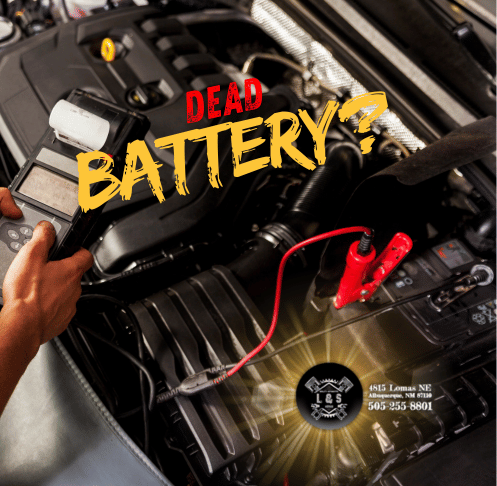
The battery and charging system receive load testing that reveals actual capacity rather than just voltage. A battery showing 12.6 volts at rest may fail a load test that simulates starting demands. Terminal connections are cleaned and protected. The alternator’s output is verified under load. This testing identifies batteries in the failure zone before they leave you stranded.
Belts and hoses throughout the engine compartment are inspected for the cracking, glazing, and softening that indicate thermal cycling damage. The specific wear patterns often indicate remaining service life more accurately than simple age or mileage. A belt that looks acceptable but shows early cracking should be scheduled for replacement before it fails.
Brake inspection goes beyond pad thickness to include rotor condition, caliper function, and fluid quality. Rotors are measured for thickness and runout. Calipers are checked for free movement and even pressure application. Brake fluid is tested for moisture contamination. The parking brake is tested for proper function and adjustment.
Tire inspection includes tread depth measurement, wear pattern analysis, and sidewall condition assessment. Wear patterns reveal alignment or suspension issues that should be addressed before they destroy another set of tires. Sidewall cracking from UV exposure is evaluated for severity. Tire age is considered regardless of tread depth, since rubber compounds degrade over time whether the tire is used or not.
Addressing Winter’s Hidden Toll
The value of a spring inspection lies in identifying developing problems before they become failures. A marginal component that winter didn’t stress may not survive summer. Conditions that cause slight symptoms now may cause serious problems under different loads. The goal isn’t to find things to repair for the sake of billing hours; it’s to give you accurate information about your vehicle’s condition so you can make informed decisions.
Some issues demand immediate attention for safety reasons. Others can be monitored and addressed on a planned schedule. Knowing the difference requires the diagnostic skills that come from training and experience with local conditions. What passes for normal wear in mild climates may indicate accelerated deterioration in Albuquerque’s environment. Interpreting those signs correctly helps you get maximum life from components while replacing them before they fail unexpectedly.
Winter is over, but its effects remain in your vehicle’s components. A spring inspection reveals what those effects are and what they mean for the months ahead.