


Back to School in 90 Degree Heat: Getting Your Car Ready for the Albuquerque School Run
August 18, 2026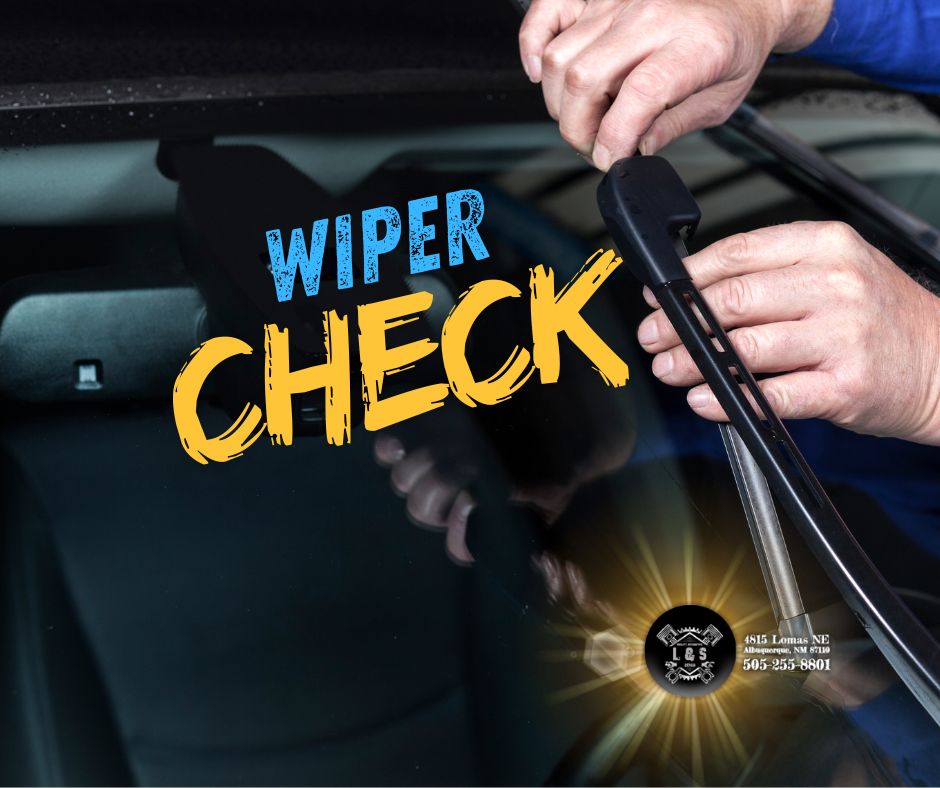
Albuquerque averages under nine inches of precipitation a year, which means your wiper blades spend most of their life doing nothing but baking. They sit against hot glass at 5,000 feet under some of the strongest sun in the country, and then one afternoon in late September a storm rolls off the Sandias and you find out driving on Lomas, that they have not been working for months. A wiper check in Albuquerque is not about rain you get every week. It is about the rain you are not expecting.
- High desert sun and ozone destroy wiper rubber faster than rain ever does, so blades here age out before they wear out.
- Streaking, chattering, and a smeared arc across the glass are signs the blade already failed, not warnings that it is about to.
- A wiper and washer check takes minutes at L&S and is the cheapest visibility upgrade your car will ever get.
What the check involves
At L&S we inspect the front and rear blades for edge wear, cracking, and frame condition, check that the arms are applying even pressure across the glass, test the washer pump and clear the nozzles, and top or replace the washer fluid with a winter-rated blend. If the blades need replacing, it is a few minutes of labor and a set of quality blades matched to your vehicle, not a generic size forced onto the wrong arm.
Wipers are an easy thing to add to any visit. If you are already coming in for a battery test, a tire pressure check, or the fall cooling system look-over, ask us to run the blades while the hood is up.
The rain you are not expecting is the one that matters, and the blades that have spent all summer in the sun are not the ones you want to meet it with.
Why blades die in a dry climate
Wiper rubber is a soft compound designed to flex and squeegee. Exposure to ozone, UV radiation, and temperature swings breaks that compound down, and Albuquerque supplies all three in quantity. Our elevation means less atmosphere between the sun and your windshield, and a car parked on the street in Nob Hill or in the UNM lots all summer has had its blades pressed against glass that regularly passes 150 degrees. The rubber hardens, cracks along the edge, and loses the flexibility that lets it flip over and wipe on each stroke.
Most manufacturers recommend replacing blades every six to 12 months. That guidance assumes normal use. In our climate the blades often reach the end of their life without ever wiping much of anything, which is why so many drivers here are surprised. The blade looks fine from the driver’s seat because it has been sitting still. The first real storm is the first real test, and it fails in the moment you need it most.
What a failed wiper blade looks like
You do not need a rainstorm to check. Hit the washer and watch one pass. Fine streaks that stay in the arc, a hazy film that clears after two or three passes, or a strip of glass the blade skips over entirely all mean the rubber has lost contact. Chatter, skip, or a squeal across the windshield means the edge has hardened and is bouncing instead of gliding. Run a fingertip along the blade and feel for small cracks, nicks, or missing chunks, and look at the rubber edge for a rounded or torn profile.
The rear wiper on an SUV or hatchback gets forgotten because it is used even less, and it usually goes first. While you are back there, check the washer nozzle. A nozzle that sprays a weak dribble or nothing at all is often just clogged with dust, but on an older car the pump or a cracked line is the culprit, and a dry windshield with a working wiper is still a smeared windshield.
The fall problem nobody plans for
September and October bring the two conditions that punish worn blades most. The first is the tail of monsoon season, when a short, heavy storm drops water on a windshield coated with a summer of dust and road film. A good blade clears it in a stroke. A hardened blade turns it into a paste that the setting sun lights up like frosted glass, and westbound traffic on Lomas at 6 p.m. is exactly where that happens. The second is the cold. Average lows at the airport during Balloon Fiesta run near 48 degrees, and the balloon park itself is five to 10 degrees cooler. Frost on the glass before dawn is common, and running a brittle blade over ice tears the edge in a single pass.
That second condition also matters for washer fluid. Summer fluid or plain water left in the reservoir can freeze on the glass on a cold morning and leave you with less visibility than you started with. A winter-rated fluid with a de-icing additive is a small change that pays for itself the first time you need to clear frost at a stoplight.
Text L&S Quality Auto Repair to set up a visit, and we will make sure the first storm of fall is an inconvenience instead of a hazard.
L&S Quality Auto Repair
4815 Lomas Blvd. NE
Albuquerque, NM 87110
Text: 505-546-7734